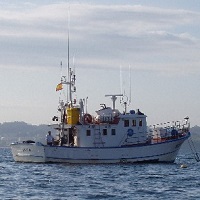
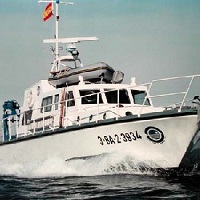
The objective of the project RADIALES, formulated in 1990, aims at “understanding and modelling the response of the marine ecosystem to the sources of temporal variability in oceanographic and planktonic components, particularly foccusing in those factors and processes affecting biological production and potentially altering the ecosystem services”. This project represents the oldest multidisciplinary ocean observation initiative still active in Spain.
Estudio de parámetro oceanográficos del Bentos del Ictioplancton y de la fauna demersal orientados a la creaciónn de una reserva de pesca en la bahía de Malaga.
Seguimiento de variables oceanográficas (fisico,quimico y biologicas) a lo largo de puntos singulares del litoral mediterraneo español.
Study of the edge of Spanish Platform on the Canary Islands Basin.
In this Cruise Plan we present a strategically collected suite of sediment coring stations that may help to study fluid flow system in the northern Tunisian margin extending to the Tyrrhenian Sea.
Analyze and evaluate the environmental impact on the coastal area of Gibraltar caused by the dumping of concrete and rock blocks into the sea.
Estimating the abundance and population structure of the target species of the trawl fishery in the Mediterranean, identified in the MEDITS project (Annex I), studying the biology of exploited communities on the shelf and upper slope of the study area and the impact of fishing on ecosystems.
Abundance indices, distribution patterns and faunal assemblages of demersal species in the Flemish Cap bank, together with the possible driving factors of their distribution. This survey belongs to the research project: “Biología Pesquera pesquerías Lejanas”. This Project is partly funded by the DCR of the EU and the Education and Science Spanish Ministery. The main objectives of the above mentioned project related with this survey time series are: a) to obtain abundance indices of the main exploited species in the Flemish Cap bank; b) to estimate the strength of yearly recruitments of these species and their distribution in the bank. c) to study the structure and distribution o the demersal and benthic communities in the area.
1. To test the sledge TST- HORUS and the methodology based on the identification and quantification of Nephrops burrows in order to estimate the Nephrops abundance using underwater images. 2. To obtain estimates of Nephrops borrows density 3. To obtain estimates of macro benthos density 4. To collect ancillary information on the occurence of trawl marks on sea bed 5. To collect sediment samples 6. To collect biological data on infauna 7. To obtain oceanographic data using a sledge mounted CTD