 Catálogo de datos del IEO
Creation year
2016
258 record(s)
Type of resources
Categories
Topics
INSPIRE themes
Keywords
Contact for the resource
Provided by
Years
Formats
Status
Service types
Scale
-
Servidor Thredds del IEO
-
Capa que contiene la distribución espacial de las praderas de angiospermas marinas de las costas españolas elaborada a partir de la fusión de varias fuentes disponibles, seleccionadas siguiendo el criterio de expertos. La información está agrupada por comunidades autónomas ya que es esta unidad administrativa la que aporta una red organizada que incluye tanto las fuentes de datos como personas expertas y conocedoras de esos datos y que aplicaron su criterio de experto en la construcción de esta capa. La elaboración de este conjunto de información comenzó en 2013 y concluyó en 2015 con la publicación de la primera edición del Atlas de las praderas marinas de España. Es un trabajo de integración de informaciones de muy variada naturaleza por lo que su grado de fiabilidad y precisión es muy variable y su uso y aplicación deben estar acotados dentro de tales circunstancias y no debe desligarse de las fuentes de referencia originales empleadas para la elaboración de los mapas finales.
-
Capa que contiene la distribución espacial de las localizaciones puntuales de praderas de angiospermas marinas de las costas españolas elaborada a partir de la fusión de varias fuentes disponibles, seleccionadas siguiendo el criterio de expertos. La información está agrupada por comunidades autónomas ya que es esta unidad administrativa la que aporta una red organizada que incluye tanto las fuentes de datos como personas expertas y conocedoras de esos datos y que aplicaron su criterio de experto en la construcción de esta capa. La elaboración de este conjunto de información comenzó en 2013 y concluyó en 2015 con la publicación de la primera edición del Atlas de las praderas marinas de España. Es un trabajo de integración de informaciones de muy variada naturaleza por lo que su grado de fiabilidad y precisión es muy variable y su uso y aplicación deben estar acotados dentro de tales circunstancias y no debe desligarse de las fuentes de referencia originales empleadas para la elaboración de los mapas finales.
-
Capa que contiene la distribución espacial de las praderas de angiospermas marinas de las costas españolas elaborada a partir de la fusión de varias fuentes disponibles, seleccionadas siguiendo el criterio de expertos. La información está agrupada por comunidades autónomas ya que es esta unidad administrativa la que aporta una red organizada que incluye tanto las fuentes de datos como personas expertas y conocedoras de esos datos y que aplicaron su criterio de experto en la construcción de esta capa. La elaboración de este conjunto de información comenzó en 2013 y concluyó en 2015 con la publicación de la primera edición del Atlas de las praderas marinas de España. Es un trabajo de integración de informaciones de muy variada naturaleza por lo que su grado de fiabilidad y precisión es muy variable y su uso y aplicación deben estar acotados dentro de tales circunstancias y no debe desligarse de las fuentes de referencia originales empleadas para la elaboración de los mapas finales.
-
The main objective of the MOOSE-GE cruises is to observe the annual evolution of the Northwestern Mediterranean Sea in the context of the climate change and anthropogenic pressure in order to be able to detect and identify long-term environmental trend and anomalies of the marine ecosystem. The annual cruise focuses on moorings maintenance and hydrology, biogeochemistry and biology monitoring of the Northwestern Mediterranean basin. It aims to follow variability of water masses properties (LIW and WMDW) and biogeochemical and biological content related to these water masses.
-
<p>The purpose of WestMedFlux is to study thermal fields in ocean-continent transition zones in the Western Mediterranean, and the role of fluids and salt diapirs on the thermal field.</p>
-
<p>Sea recovery of all components of a stratospheric balloon: balloon envelope, parachutes, and gondolas. Test of new gamma detectors and characterization of solar panels for the Strateole project. There has been no work done at sea after balloon fly. The balloon flight took place. The climb path was consistent with the expected. However the ceiling track was a little south and a little slower than expected. The ball has arrived above the sea but too south. Down a bit low, he found the westerly winds that brought him back to earth. Separating late flight and recovery have made campaigning in the Basque country.</p>
-
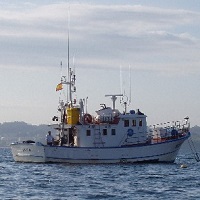
Monthly survey to study thermohaline and biological characterization of water masses in the East-North Atlantic.
-
Monthly survey to study thermohaline and biological characterization of water masses in the East-North Atlantic.
-
Monthly survey to study thermohaline and biological characterization of water masses in the East-North Atlantic.