 Catálogo de datos del IEO
Keyword
benthos samplers
69 record(s)
Type of resources
Categories
Topics
INSPIRE themes
Keywords
Contact for the resource
Provided by
Years
Formats
Status
-
Development of underwater photogrammetry system for Marine Renewable Energy
-
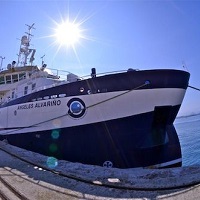
The main objective foreseen in the ECOMARG 2021 campaign, to be carried out on board the R/V Ángeles Alvariño (IEO), is the study of the spatial distribution, structure and dynamics of vulnerable habitats of the ZEC “El Cachucho” (Le Danois Bank and its internal basin) and the head of the nearby Lastres canyon. Specific objectives: • Estimation of the abundance and spatial distribution of the epibenthic communities that characterize the vulnerable habitats present in the area, with special priority for the classified as 1170 Reefs in the DH. • Monitoring of the conservation status of vulnerable habitats and their communities biological, using fixed sampling stations, through indicators of the Red Natura 2000, in accordance with article 17 of the Habitats Directive, applying technical photogrammetric. • Geophysical study of the Lastres and Llanes canyons by obtaining cartography high resolution. • Characterization of the oceanographic dynamics of the BBL (Benthic Boundary Layer - layer near the bottom) in the Gaviera Canyon and in the fixed sampling stations from El Cachucho to know the environmental characteristics of the habitats 1170. • Study of the mobile species (mainly fish, crustaceans, and mollusks) of the Vulnerable habitats present at fixed sampling stations using platforms multiparametric (landers).
-
The objective of the CIRCAROCK0521 survey is to obtain the necessary information that will allow “identifying and evaluating the environmental status of circalittoral and rocky bathyal habitats”. The specific objectives that are proposed are: 1. Identify structuring species that characterize rocky circalittoral habitats. 2. Know the distribution of rocky circalittoral habitats. 3. Identify environmental variables involved in the distribution of rocky circalittoral habitats. 3. Compile information that is necessary to calculate the status and condition indicators that allow evaluating the conservation status of the different rocky circalittoral habitats. Additionally, the survey will allow documenting the rocky bottoms of the Cantabrian Sea and the Galician Atlantic coast in order to achieve the following secondary objectives: - Studies with multibeam probe and topas for mapping the rocky bottoms and characterization of the geomorphology of the area. - Document recording video and photo the species that characterize the different rocky circalittoral habitats. - Identify typical species of rocky circalittoral habitats from samples obtained with the rock dredge. - Prepare a catalog of species in which the taxonomy, the visual aspect and different biological and ecological characteristics of the different species are related.
-
1.Prospeción baatimétrica y geofísica utilizando técnicas de ecosonda multihaz y sísmica de muy alta resolución paara llevar a cabo un estudio morfológico y estratigráfico detallado de la zona de estudio. 2.Muestreos de sedimento mediante draga box-corer para conocer las características texturales del sedimento y el bentos en estos fondos marinos. 3.Se efectúan pruebas de un sensor de sedimentos (LISST-ABS) acoplado al CTD SB25.
-
COL_MAERL.El objetivo del proyecto es evaluar el impacto acumulado de la pesca sobre los fondos de maërl comparando fondos impactados fuera de la reserva marina de las Islas Columbretes con fondos protegidos, durante más de dos décadas, dentro de la reserva. Este conocimiento informará del desarrollo de métodos de pesca que promuevan actividades sostenibles en el área de estudio. Por lo tanto, en esta campaña los objetivos principales son: 1)Obtener información sobre la distribución de los fondos de maërl en la zona de estudio, mediante observaciones puntuales con cámara sumergible (IPSE). 2)Comparar la composición de las especies indicadoras y estructurales de los fondos de maërl/rodolitos en cuanto a la composición de especies, morfotipos y tamaños. Para ello se realizarán muestreos del bentos mediante dragas. 3)Obtener índices de abundancia y demografía de langosta mediante vídeo cebado. Las tomas de video se llevaran a cabo en zonas con distintos niveles de protección, tanto en el interior de la reserva como en el entorno más cercano. 4) Analizar en detalle las muestras obtenidas con las dragas, con el fin de detectar cambios en la estructura de las comunidades algales y faunales de los fondos de maërl/rodolitos, comparando localidades en un gradiente de presión pesquera.
-
Mantenimiento de los colectoresprofundos de langosta, obtención de larvas filosomas y muestreo con dragas en maerl.
-
1-Evaluación del estado de las poblaciones de peces y cefalópos en el infralitoral rocoso (Subprograma PC1, Encomienda EEMM) 2-Evaluación del estado de las comunidades bentónicas en el infralitoral rocoso (Subprograma HB1, Encomienda EEMM) 3-Evaluación del estado de las especies protegidas bentónicas en el infralitoral rocoso (Subprograma HB6, Encomienda EEMM)
-
The Western Iberian Margin (WIM) the area of interest for this cruise is located at the slope of the Southwest coast of Portugal (depths from 200 to 800 meters), where otter trawling is occurring on a continuous base, targeting Norway lobster (Nephrops norvegicus). The area includes fishing grounds with different levels of impact (from no fishing to intense trawling and fixed nets). We identified three main objectives for this sampling campaign: 1) Identify areas of high and low fishing intensity by means of side scan sonar and ROV exploration 2) Sample different areas/depths between 200 and 1000 m water depth for benthos with box corer and multiple corer 3) Collect sediments from the fished and the non‐fished site with box corer or multiple corer for onboard experiments in which different measures of ecosystem functioning will be measured 4) Collect colonization trays at food fall site with the ROV (uAveiro)
-
Study of the circalitoral benthic habitats in sedimentary bottoms of the Canary Islands Demarcation. Identification and mapping of habitats. Characterization of benthic communities. Fine-tuning of the study techniques of the benthic habitats of the circalitoral and bathyal sedimentary bottoms. Identification, mapping and characterization of benthic communities.
-
Multibeam bathymetic survey, high resolution seismic profiles and characterization of seabed and habitats of the continental slope of Murcia