 Catálogo de datos del IEO
Keyword
Fauna abundance per unit area of the bed
105 record(s)
Type of resources
Categories
Topics
INSPIRE themes
Keywords
Contact for the resource
Provided by
Years
Formats
Status
-
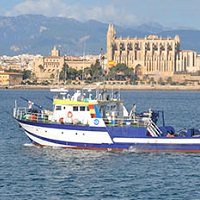
Mantenimiento de los colectoresprofundos de langosta, obtención de larvas filosomas y filmaciones submarinas con video cebado.
-
Mantenimiento de los colectoresprofundos de langosta, obtención de larvas filosomas y filmaciones submarinas con video cebado.
-
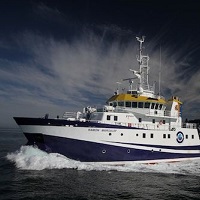
ROV evaluation to analyze fishing pressure on benthic habitat
-
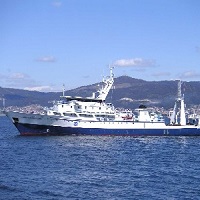
Prospecting Scomber scombrus and Trachurus trachurus eggs and adult catches to estimate egg production and fecundity of Scomber scombrus for joint international evaluation of spawning stock biomass of mackerel by the method annual egg production (MPAH) and production eggs Trachurus.
-
Get abundance indices of groundfish demersales species. Get the size structure of commercially exploited stocks. Collection of biological material. Prospecting deep zones. Get physical-chemical parameters of water in the study area. Calibration between the "B/O Michael Oliver" and the "B/O Cornide Saavedra" Demersal campaign Gulf of Cadiz
-
COL_MAERL.El objetivo del proyecto es evaluar el impacto acumulado de la pesca sobre los fondos de maërl comparando fondos impactados fuera de la reserva marina de las Islas Columbretes con fondos protegidos, durante más de dos décadas, dentro de la reserva. Este conocimiento informará del desarrollo de métodos de pesca que promuevan actividades sostenibles en el área de estudio. Por lo tanto, en esta campaña los objetivos principales son: 1)Obtener información sobre la distribución de los fondos de maërl en la zona de estudio, mediante observaciones puntuales con cámara sumergible (IPSE). 2)Comparar la composición de las especies indicadoras y estructurales de los fondos de maërl/rodolitos en cuanto a la composición de especies, morfotipos y tamaños. Para ello se realizarán muestreos del bentos mediante dragas. 3)Obtener índices de abundancia y demografía de langosta mediante vídeo cebado. Las tomas de video se llevaran a cabo en zonas con distintos niveles de protección, tanto en el interior de la reserva como en el entorno más cercano. 4) Analizar en detalle las muestras obtenidas con las dragas, con el fin de detectar cambios en la estructura de las comunidades algales y faunales de los fondos de maërl/rodolitos, comparando localidades en un gradiente de presión pesquera.
-
Mantenimiento de los colectoresprofundos de langosta, obtención de larvas filosomas y filmaciones submarinas con video cebado.
-
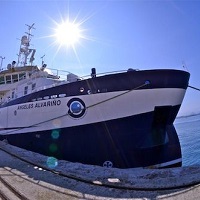
The main objective foreseen in the ECOMARG 2021 campaign, to be carried out on board the R/V Ángeles Alvariño (IEO), is the study of the spatial distribution, structure and dynamics of vulnerable habitats of the ZEC “El Cachucho” (Le Danois Bank and its internal basin) and the head of the nearby Lastres canyon. Specific objectives: • Estimation of the abundance and spatial distribution of the epibenthic communities that characterize the vulnerable habitats present in the area, with special priority for the classified as 1170 Reefs in the DH. • Monitoring of the conservation status of vulnerable habitats and their communities biological, using fixed sampling stations, through indicators of the Red Natura 2000, in accordance with article 17 of the Habitats Directive, applying technical photogrammetric. • Geophysical study of the Lastres and Llanes canyons by obtaining cartography high resolution. • Characterization of the oceanographic dynamics of the BBL (Benthic Boundary Layer - layer near the bottom) in the Gaviera Canyon and in the fixed sampling stations from El Cachucho to know the environmental characteristics of the habitats 1170. • Study of the mobile species (mainly fish, crustaceans, and mollusks) of the Vulnerable habitats present at fixed sampling stations using platforms multiparametric (landers).
-
Mantenimiento de los colectoresprofundos de langosta, obtención de larvas filosomas y muestreo con dragas en maerl.
-
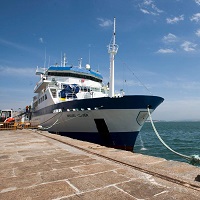
Get abundance indices of groundfish demersales species. Get the size structure of commercially exploited stocks. Collection of biological material. Prospecting deep zones.Get physical-chemical parameters of water in the study area. Sampling using a box-corer to obtain granulometrics indices of sediment and biological sampling of infauna.