 Catálogo de datos del IEO
Keyword
Zoobenthos taxonomy-related counts
28 record(s)
Type of resources
Categories
Topics
INSPIRE themes
Keywords
Contact for the resource
Provided by
Years
Formats
Status
-
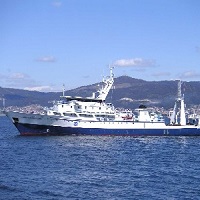
Evaluación de los recursos pesqueros demersales del Mediterráneo
-
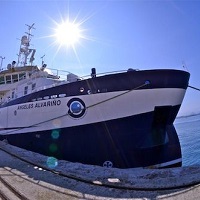
The objective of the INTEMARES A4 Canarias 1118 cruise is the evaluation by direct methods of the effect of the fishing pressure exerted fundamentally by fixed bottom gear on the distribution and quality of the benthic habitats RN2000. In addition, it will be analyzed: • Effect of fishing on benthic communities and habitats. • Evaluation of the relationship between the lost arts (phantom fishing) and the different levels of effort.5 • In case temporary trends are identified in the effort, and if the priority objectives have been covered, the relationship between temporal trends in effort and the quality of habitats.
-
The campaign targets under TASIFE 0415, to carry on board the research vessel Angeles Alvariño, is the assessment of the state of the benthic epifauna in the vicinity of the volcanic eruption of La Restinga. Specifically: • Direct sampling of rocks and epibenthic macrofauna benthic dredge drag. • Making extensive HD images with Observation Vehicle Towing TASIFE 2013.
-
Abundance indices, distribution patterns and faunal assemblages of demersal species in the northern coast of Spain (Atlantic Galician shelf and Cantabrian sea shelf), together with the possible driving factors of their distribution
-
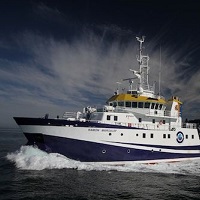
Identification of benthic communities. During the cruise is intended to cover the following targets: - Identify the benthic habitats and their spatial distribution by direct sampling (epibentonic trawl) and indirect (ROV, sled). - Complete the floristic and faunistic inventory. - Characterize the sediment (grain size and organic matter). - Multibeam bathymetric survey. Further analysis of this information will give us to : - Perform a bionomic map of marine benthos, representing the bottom type and the biological community that inhabits it. - Estimate the benthic biodiversity. - Estimate the abundance of the most characteristic species. - Mapping the main habitats of interest. - Get a sedimentary map. - Complete the geomorphology of the study area.
-
Set up techniques of circalittoral benthic habitat study of sedimentary seabeds, including identification and cartography of habitat and characterization of benthic communities, aiming to develop MSFD indicators.
-
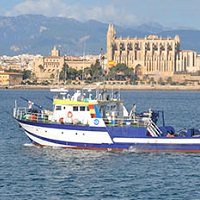
Estudio de parámetro oceanográficos del Bentos del Ictioplancton y de la fauna demersal orientados a la creaciónn de una reserva de pesca en la bahía de Malaga.
-
Evaluation of demersal and benthic ecosystem in the northern coast of Spain, using bottom trawl surveys
-
Preliminary study for the protection, management and determination of reservation of fishing in the bay area maritime Malaga (remala).
-
The main objective of this campaign is to obtain acoustic, sedimentary and biological data of the study area in order to obtain the necessary information for the declaration of this zone as SCI. For this, three specific objectives are contemplated: 1. Geomorphological and sedimentary characterization started in the INTEMARES MURCIA campaign 0118 and continued in the INTEMARES campaign A22MU-0819, from the acquisition and analysis of the bathymetric and reflectivity data obtained using the EM710 multibeam echo sounder and of the profiles of the TOPAS PS018 parametric echo sounder, combined with the collection of surface sediment samples using box-corer dredgers, short cores of gravity, dredge Van Veen and Shipek in the localities of interest that it was not possible to sample in the first two campaigns. The acquisition of acoustic data has as a priority complete the areas indicated by the bentos team to obtain photo images and video in the following campaign to be carried out on board the Sarmiento de Gamboa ship, and where they will use the ROV Liropus. 2. Bionomic characterization, also, to complete the information obtained in the previous campaigns carried out in the area with the aim of improving cartography fauna. In this case, all the surface samples obtained will be studied, and will process to obtain the biological material. 3. Obtaining hydrographic profiles at different depths to identify the bodies of water present in the different sectors of the study area.