 Catálogo de datos del IEO
Keyword
Phytoplankton taxonomic abundance in water bodies
135 record(s)
Type of resources
Categories
Topics
INSPIRE themes
Keywords
Contact for the resource
Provided by
Years
Formats
Status
-
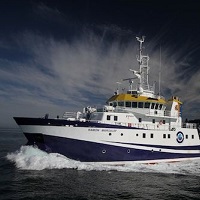
Analisys of Dinophysis acuminata phytoplankton presence over the Galician west coast.
-
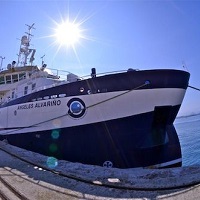
The goals of this survey are framed within the educational activity of the Faculty of Marine Sciences ULPGC to give the possibility of a complete oceanographic study (Physical , Chemical , Biological and Geological Survey ) in the south of Gran Canaria students of Degree, Bachelor and Master , the convergence zone between the area and the trail of the island and the presence of permanent rotation south of it. Thus this survey will contribute to a comprehensive training for students in oceanographic study of an oceanic region may Determine the structure of water bodies, the effects of convergence and divergence to the passage of the Canary Current across the channels between islands, mass transport , and nutrients. Determine the distribution of chemical species , including oxygen and carbon dioxide system and quantify the transport of CO2 in the atmosphere-ocean study area , the effect of micro and mesoscale phenomena in their distribution. To characterize the effect of the wake , turns and other mesoscale structures in the distribution of species of phytoplankton and zooplankton.
-
Long term time series monitoring in 3 standard sections: Santander, Gijón and Cudillero to study the hydrographical and biological variability and tendencies in the water masses, the timing of any pronounced shift observed on them as well as the search of their causes and their biogeochemical consequences.
-
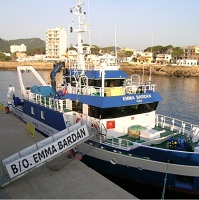
Multidisciplinary monitoring of the Spanish Mediterranean waters
-
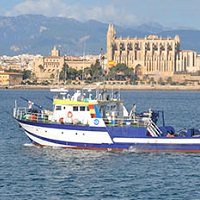
Prácticas dirigidas a los alumnos de las asignaturas Ecología Acuática y Biología Marina de la UIB, con el objetivo de trabajar in situ las principales técnicas oceanográficas para la adquisición de información de la columna de agua y la obtención de muestras de agua y organismos del plancton y del bentos,visualización del fondo marino con ROV.
-
The goals of this campaign are framed within the objectives of the overall project 'Radial Profunda de Canarias', being the experimental cruise of the proposal. Thus, this cruise will help to: • Determine the structure of the current when it reaches the Canary Islands, of the Outcrop Current and the polar counterflow of slope in its passage through the Canary Archipelago and the African slope, stimating its mass transport, heat and nutrients. • Characterize the different modes of variability of heat and mass transport in easternorth atlantic subtropical gyre and the oucrop in northwest African coast. • Characterize the annual cycle in the physical conditions of the surface layers and mixture to where the seasonal cycle is significant, relating it to the meteorological forcings. • Characterization of changes in water masses, mainly in the North Atlantic Central Water (NACW), in Antarctic Atlantic Intermediate Water (AAIW) in Mediterranean Water (MW), bottom waters of the Canary Basin and the oucrop in northwest African coast, in based on temperature, salinity, nutrients and oxygen. • To characterize the zooplancton and micronecton deep communities. • To charactereze the microbian and heterotrophic communities.
-
The goals of this campaign are framed within the objectives of the overall project 'Radial Profunda de Canarias', being the experimental cruise of the proposal. Thus, this cruise will help to: • Determine the structure of the current when it reaches the Canary Islands, of the Outcrop Current and the polar counterflow of slope in its passage through the Canary Archipelago and the African slope, stimating its mass transport, heat and nutrients. • Characterize the different modes of variability of heat and mass transport in easternorth atlantic subtropical gyre and the oucrop in northwest African coast. • Characterize the annual cycle in the physical conditions of the surface layers and mixture to where the seasonal cycle is significant, relating it to the meteorological forcings. • Characterization of changes in water masses, mainly in the North Atlantic Central Water (NACW), in Antarctic Atlantic Intermediate Water (AAIW) in Mediterranean Water (MW), bottom waters of the Canary Basin and the oucrop in northwest African coast, in based on temperature, salinity, nutrients and oxygen. • To characterize the zooplancton and micronecton deep communities.
-
The goals of this campaign are framed within the objectives of the overall project 'Radial Profunda de Canarias', being the experimental cruise of the proposal. Thus, this cruise will help to: • Determine the structure of the current when it reaches the Canary Islands, of the Outcrop Current and the polar counterflow of slope in its passage through the Canary Archipelago and the African slope, stimating its mass transport, heat and nutrients. • Characterize the different modes of variability of heat and mass transport in easternorth atlantic subtropical gyre and the oucrop in northwest African coast. • Characterize the annual cycle in the physical conditions of the surface layers and mixture to where the seasonal cycle is significant, relating it to the meteorological forcings. • Characterization of changes in water masses, mainly in the North Atlantic Central Water (NACW), in Antarctic Atlantic Intermediate Water (AAIW) in Mediterranean Water (MW), bottom waters of the Canary Basin and the oucrop in northwest African coast, in based on temperature, salinity, nutrients and oxygen. Additionally, and as part of the 'Enhancing oceanography capacities in CCLME Western Africa countries Phase III' project, during the Raprocan1911 campaign a specific experiment, with the objective of determining primary production, by Direct methods in coastal transition zones between the Northwest Outcrop African and the center of the subtropical turn.
-
The goals of this campaign are framed within the objectives of the overall project 'Radial Profunda de Canarias', being the experimental cruise of the proposal. Thus, this cruise will help to: • Determine the structure of the current when it reaches the Canary Islands, of the Outcrop Current and the polar counterflow of slope in its passage through the Canary Archipelago and the African slope, stimating its mass transport, heat and nutrients. • Characterize the different modes of variability of heat and mass transport in easternorth atlantic subtropical gyre and the oucrop in northwest African coast. • Characterize the annual cycle in the physical conditions of the surface layers and mixture to where the seasonal cycle is significant, relating it to the meteorological forcings. • Characterization of changes in water masses, mainly in the North Atlantic Central Water (NACW), in Antarctic Atlantic Intermediate Water (AAIW) in Mediterranean Water (MW), bottom waters of the Canary Basin and the oucrop in northwest African coast, in based on temperature, salinity, nutrients and oxygen. • To characterize the zooplancton and micronecton deep communities. • To charactereze the microbian and heterotrophic communities.
-
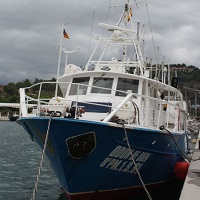
Multidisciplinary monitoring of the Spanish Mediterranean waters