 Catálogo de datos del IEO
Keyword
Dissolved organic carbon concentration in the water column
16 record(s)
Type of resources
Categories
Topics
INSPIRE themes
Keywords
Contact for the resource
Provided by
Years
Formats
Status
-
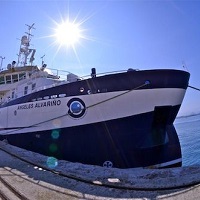
The main objective is that students of MIOUCA become familiar with some of the techniques that can be used aboard a research vessel. To do this, aboard the "B / O Angeles Alvariño" of the Spanish Institute of Oceanography (IEO), students will perform a series of activities that will enable the characterization of the water column and seabed, from a point of view multidisciplinary and integrative (biological, physical, chemical and geological), along two radial one perpendicular to the Cape Trafalgar and another perpendicular to the Guadalquivir River. To obtain the information necessary to perform this study different sampling techniques will be used, and data acquisition and analysis, and ship with their own computers. In this way the campaign will contribute to a comprehensive education of students in the multidisciplinary study of an oceanic region, with the participation of teachers in different areas of knowledge.
-
Training of young oceanographers, using the Malaspina project methodologies.
-
NA
-
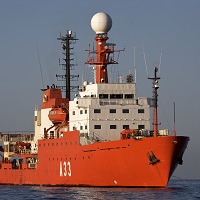
FICARAM cruise aims to investigate the evolution of decadal anthropogenic carbon and to evaluate the CO2 uptake capacity in the sector South Atlantic Ocean and its spread to Ecuador and Nord-tropical zone. The section of this cruise is a repeat section following the trace made in 1994 by IFREMER (Laboratoire de Physique des Oceans) into the French project CITHER as a WOCE (http://wwz.ifremer.fr/lpo/Moyens-a-la-mer/Les-campagnes-a-la-mer/Cither-2). This section was repeated in 2001 and 2002 by the Oceanology Group of the Instituto de Investigaciones Marinas of CSIC as part of CAVASSO and CARBOOCEAN European projects. This section is part of the international programs GOSHIP (http://www.go-ship.org/CruisePlans.html) and IOPCC. These programs allow the coordination between the various activities in the global ocean (http://www.go-ship.org/RefSecs/GOSHIPMap_April2011.pdf). The objectives of this cruise are framed in the EU FP7 project CARBOCHANGE (http://carbochange.b.uib.no/) under grant agreement nº 264879. Another important component of FICARAM cruise aims examine the biological and biogeochemical mechanisms that hinder total dissolved organic carbon (DOC) remineralisation in marine systems, taking a multidisciplinary perspective and applying many different approaches. This objective is the global objective of the Spanish project DOREMI that join this FICARAM cruise. Along the section, the DOREMI project will test the effect of different factors (carbon and nutrient additions, and microbial structure) on DOC degradation in epipelagic, mesopelagic and deep waters, developing some experiments determining the potential degradability of mesopelagic and epipelagic DOM, and the role that labile C supplements plays regulating this process and by the microbial structure.
-
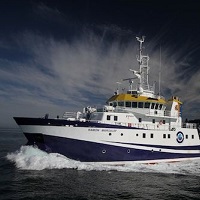
Study the role of B vitamins on the community structure, activity and succesion of the microbial plankton in a coastal upwelling system.
-
Study the role of B vitamins on the community structure, activity and succesion of the microbial plankton in a coastal upwelling system.
-
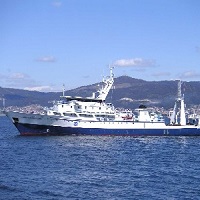
The cruise RadProf201209 is part of the timeseries program from the Spanish Institute of Oceanography (IEO) following international strategies for ocean climate monitoring (CLIVAR, GOOS etc). It covers a hydrographical section westwards of Cape Finisterre in Northwest Spain along the 43ºN latitude, extending c.a. 250 nm into the western Iberia basin. The sampling includes hydrography, current velocity fields and water samples collection for biogeopchemical analysis. It is planned the deployment of a mooring line at 43ºN; 11ºW, at a site where current measurements timeseries exist. RadProf201209 adds specific sampling of biogeochemical properties, organic matter and plankton in alliance with the research project BIOPROF.
-

Recientes evaluaciones de la absorción de CO2 en el Atlántico Norte mostraron que el componente natural del ciclo del carbono se ha visto afectado por la variabilidad de la circulación termohalina (MOC). La primera meta del proyecto BOCATS es extender las series temporales del MOC y la observación de la ventilación de las masas agua para una mejor cuantificación de su efecto sobre las variaciones en el ciclo del carbono en el Atlántico Norte en escalas de tiempo de décadas. La estimación de esta variabilidad es esencial para evaluar los futuros escenarios de cambio climático. La segunda meta de BOCATS es cuantificar el efecto del presente aumento de CO2 atmosférico en la producción y disolución de CaCO3. La hipótesis universalmente aceptada del ciclo de CaCO3 en estado estacionario ha sido puesta en duda debido a la acidificación observada en aguas profundas del Atlántico Norte y a su impacto potencialmente negativo sobre los organismos calcáreos. Los objetivos del proyecto BOCATS se abordan en dos actividades principales: i) Mantener el experimento de observación decenal de la circulacion y el ciclo de carbono con la novena realización de la sección hidrografía/geoquímica A25 entre Portugal y Groenlandia que se inició en 1997, ii) La evaluación en el giro subpolar de la variabilidad del ciclo del carbono, separando sus componentes natural y antropogénica, e incluyendo la materia orgánica, sedimentos y otros elementos biogénicos. La principal contribución observacional de BOCATS será un crucero a realizar en junio y julio de 2016. Las observaciones de alta calidad previstas en el giro subpolar contribuirán a la detección temprana de la alteración del ciclo del carbono y permitirán la estimación precisa de las tasas de almacenamiento de CO2 y de acidificación, relacionando estos cambios con la variabilidad de la MOC.
-
Study the role of B vitamins on the community structure, activity and succesion of the microbial plankton in a coastal upwelling system.
-
Study the evolution of the variables of the sea in the Gulf of Cadiz and the Strait of Gibraltar.