 Catálogo de datos del IEO
Keyword
Particulate total and organic nitrogen concentrations in the water column
10 record(s)
Type of resources
Categories
Topics
INSPIRE themes
Keywords
Contact for the resource
Provided by
Years
Formats
Status
-
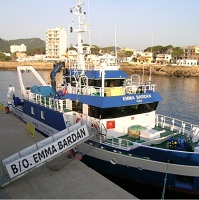
To collect relevant information to evaluate The levels of eutrophication in the coastal strip between Algeciras and Barcelona (Iberian coast, Alborán Sea and NW Mediterranean).
-
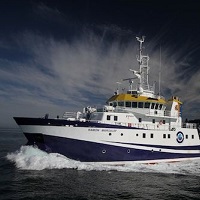
The scientific objectives of the cruise include the characterization of thermohaline fields, hydrodynamics, biogeochemistry and complementary biological measuremens in Atlantic Galician waters in a transect westwards from Finisterre surpassing the Galician Bank to the interior of the Iberian Basin, covering the entire water column to about 4,500 m deep. The cruise is part of a series that begun in 2003
-
SCAPA will investigate the structural and dynamic attributes of the planktonic system in the Cantabrian Sea. This scientific objective will be in turn the base for a critical testing of the plankton indicators proposed by the Marine Strategy Framework Directive (MSFD) and for the development of new alternatives if necessary. SCAPA will carry out a crossed comparative approach enclosing the main modes of plankton variability; i.e. shelf, slope and oceanic waters with vertical resolution at seasonal and circadian time scales. It will study all planktonic components, from viruses to macrozooplankton at several organization levels (species, functional groups and trophic level), including also non-living organic matter derived from their activity (i.e. dissolved organic matter, aggregates and phaecal pellets). It will quantify production and biomass ratios across these organization levels and organic matter pools, specifically measure bacterial and primary production and downward fluxes (vertical migration and sediment traps) to diagnose food web structure and trophic pathways. SCAPA will focus on several aspects currently identified to present a deficit of information: seasonal variability in the oceanic domain (critical to implement indicators), the role of macroplankton (mainly at slope and oceanic domains) and microphagous gelatinous zooplankton, add on scarcely studied plankton vertical migration and quantification and quality of sinking biogenic material. The methodological approach takes advantage of the ongoing monitoring program RADIALES and will increase sampling effort to resolve vertical and circadian resolution at four times during the seasonal cycle. It includes a series of methodologies and techniques (e.g. flow cytometry, HPLC, plankton image analysis and automated classification) that are particularly efficient in sample time processing; a critical aspect for implementing plankton indicators, which have to be obtained by robust methodologies with reasonable costs and at operational temporal scales. SCAPA approaches the societal challenge of an ecosystem-based marine management, explicit in the European MSFD. Management actions related with the marine environment (e.g.: Fisheries) require implementing a series of indicators that resume the main structural and dynamic attributes of the plankton system. The latter is challenged, however, by the high complexity of the structure and dynamics of this system. Resolving this complexity is the main scientific objective of SCAPA. The development of indicators in marine ecology is in its founding state, although recently fostered by the MSFD.
-
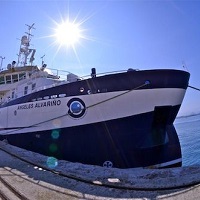
The main objectives for the MedSeA cruise are to: - Refine climatological maps of carbonate species distribution (pH, pCO2, CO32-, CT, AT, CaCO3 saturation states), along with their isotopic signatures, in the Mediterranean Sea. - Report on the determination of the anthropogenic carbon distribution throughout the whole Mediterranean Sea and its associated uncertainty estimate - Determine the effects of carbonate chemistry on Mediterranean calcifying and non-calcifying planktonic organisms. - Determine synergistic effects of acidification, warming and nutrients on key pelagic organisms. - Identify and quantify responses of fundamental Mediterranean biogeochemical processes to acidification and warming. - MedSeA is carried out in collaboration with the Geotraces program in order to collect water for chemical large volume trace elements and isotopes such as Th/Pa, Artificial radionuclides, Th-234, Nd-isotopes and Ra.
-
The scientific objectives of the cruise include the characterization of thermohaline fields, hydrodynamics, biogeochemistry and complementary biological measuremens in Atlantic Galician waters in a transect westwards from Finisterre surpassing the Galician Bank to the interior of the Iberian Basin, covering the entire water column to about 4,500 m deep. The cruise is part of a series that begun in 2003
-
SCAPA will investigate the structural and dynamic attributes of the planktonic system in the Cantabrian Sea. This scientific objective will be in turn the base for a critical testing of the plankton indicators proposed by the Marine Strategy Framework Directive (MSFD) and for the development of new alternatives if necessary. SCAPA will carry out a crossed comparative approach enclosing the main modes of plankton variability; i.e. shelf, slope and oceanic waters with vertical resolution at seasonal and circadian time scales. It will study all planktonic components, from viruses to macrozooplankton at several organization levels (species, functional groups and trophic level), including also non-living organic matter derived from their activity (i.e. dissolved organic matter, aggregates and phaecal pellets). It will quantify production and biomass ratios across these organization levels and organic matter pools, specifically measure bacterial and primary production and downward fluxes (vertical migration and sediment traps) to diagnose food web structure and trophic pathways. SCAPA will focus on several aspects currently identified to present a deficit of information: seasonal variability in the oceanic domain (critical to implement indicators), the role of macroplankton (mainly at slope and oceanic domains) and microphagous gelatinous zooplankton, add on scarcely studied plankton vertical migration and quantification and quality of sinking biogenic material. The methodological approach takes advantage of the ongoing monitoring program RADIALES and will increase sampling effort to resolve vertical and circadian resolution at four times during the seasonal cycle. It includes a series of methodologies and techniques (e.g. flow cytometry, HPLC, plankton image analysis and automated classification) that are particularly efficient in sample time processing; a critical aspect for implementing plankton indicators, which have to be obtained by robust methodologies with reasonable costs and at operational temporal scales. SCAPA approaches the societal challenge of an ecosystem-based marine management, explicit in the European MSFD. Management actions related with the marine environment (e.g.: Fisheries) require implementing a series of indicators that resume the main structural and dynamic attributes of the plankton system. The latter is challenged, however, by the high complexity of the structure and dynamics of this system. Resolving this complexity is the main scientific objective of SCAPA. The development of indicators in marine ecology is in its founding state, although recently fostered by the MSFD.
-
The scientific objectives of the cruise include the characterization of thermohaline fields, hydrodynamics, biogeochemistry and complementary biological measuremens in Atlantic Galician waters in a transect westwards from Finisterre surpassing the Galician Bank to the interior of the Iberian Basin, covering the entire water column to about 5,000 m deep. The cruise is part of a series that begun in 2003
-
SCAPA will investigate the structural and dynamic attributes of the planktonic system in the Cantabrian Sea. This scientific objective will be in turn the base for a critical testing of the plankton indicators proposed by the Marine Strategy Framework Directive (MSFD) and for the development of new alternatives if necessary. SCAPA will carry out a crossed comparative approach enclosing the main modes of plankton variability; i.e. shelf, slope and oceanic waters with vertical resolution at seasonal and circadian time scales. It will study all planktonic components, from viruses to macrozooplankton at several organization levels (species, functional groups and trophic level), including also non-living organic matter derived from their activity (i.e. dissolved organic matter, aggregates and phaecal pellets). It will quantify production and biomass ratios across these organization levels and organic matter pools, specifically measure bacterial and primary production and downward fluxes (vertical migration and sediment traps) to diagnose food web structure and trophic pathways. SCAPA will focus on several aspects currently identified to present a deficit of information: seasonal variability in the oceanic domain (critical to implement indicators), the role of macroplankton (mainly at slope and oceanic domains) and microphagous gelatinous zooplankton, add on scarcely studied plankton vertical migration and quantification and quality of sinking biogenic material. The methodological approach takes advantage of the ongoing monitoring program RADIALES and will increase sampling effort to resolve vertical and circadian resolution at four times during the seasonal cycle. It includes a series of methodologies and techniques (e.g. flow cytometry, HPLC, plankton image analysis and automated classification) that are particularly efficient in sample time processing; a critical aspect for implementing plankton indicators, which have to be obtained by robust methodologies with reasonable costs and at operational temporal scales. SCAPA approaches the societal challenge of an ecosystem-based marine management, explicit in the European MSFD. Management actions related with the marine environment (e.g.: Fisheries) require implementing a series of indicators that resume the main structural and dynamic attributes of the plankton system. The latter is challenged, however, by the high complexity of the structure and dynamics of this system. Resolving this complexity is the main scientific objective of SCAPA. The development of indicators in marine ecology is in its founding state, although recently fostered by the MSFD.
-
The scientific objectives of the cruise include the characterization of thermohaline fields, hydrodynamics, biogeochemistry and complementary biological measuremens in Atlantic Galician waters in a transect westwards from Finisterre surpassing the Galician Bank to the interior of the Iberian Basin, covering the entire water column to about 5,000 m deep. The cruise is part of a series that begun in 2003
-
SCAPA will investigate the structural and dynamic attributes of the planktonic system in the Cantabrian Sea. This scientific objective will be in turn the base for a critical testing of the plankton indicators proposed by the Marine Strategy Framework Directive (MSFD) and for the development of new alternatives if necessary. SCAPA will carry out a crossed comparative approach enclosing the main modes of plankton variability; i.e. shelf, slope and oceanic waters with vertical resolution at seasonal and circadian time scales. It will study all planktonic components, from viruses to macrozooplankton at several organization levels (species, functional groups and trophic level), including also non-living organic matter derived from their activity (i.e. dissolved organic matter, aggregates and phaecal pellets). It will quantify production and biomass ratios across these organization levels and organic matter pools, specifically measure bacterial and primary production and downward fluxes (vertical migration and sediment traps) to diagnose food web structure and trophic pathways. SCAPA will focus on several aspects currently identified to present a deficit of information: seasonal variability in the oceanic domain (critical to implement indicators), the role of macroplankton (mainly at slope and oceanic domains) and microphagous gelatinous zooplankton, add on scarcely studied plankton vertical migration and quantification and quality of sinking biogenic material. The methodological approach takes advantage of the ongoing monitoring program RADIALES and will increase sampling effort to resolve vertical and circadian resolution at four times during the seasonal cycle. It includes a series of methodologies and techniques (e.g. flow cytometry, HPLC, plankton image analysis and automated classification) that are particularly efficient in sample time processing; a critical aspect for implementing plankton indicators, which have to be obtained by robust methodologies with reasonable costs and at operational temporal scales. SCAPA approaches the societal challenge of an ecosystem-based marine management, explicit in the European MSFD. Management actions related with the marine environment (e.g.: Fisheries) require implementing a series of indicators that resume the main structural and dynamic attributes of the plankton system. The latter is challenged, however, by the high complexity of the structure and dynamics of this system. Resolving this complexity is the main scientific objective of SCAPA. The development of indicators in marine ecology is in its founding state, although recently fostered by the MSFD.