 Catálogo de datos del IEO
Keyword
486
3 record(s)
Type of resources
Categories
Topics
INSPIRE themes
Keywords
Contact for the resource
Provided by
Years
Formats
Status
-
Cr. Listado 89 - ref CEDO 315
-
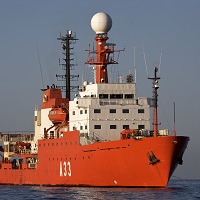
A physical-geological mooring is installed at the East of Elephant Island in order to monitor the presence / absence of the Antarctic slope front on the south slope of the South Scotia Sea, and to study its role in the modification of intermediate waters of the Antarctic Circumpolar Current. The addition of a sediment trap will study the flow of sediments associated with the dynamics of the area and identify terrigenous and biogenic composition. The data obtained will be used to optimize the model of the NASA Antarctic regional (within the project ECCO2/ECCO3), the results turn will allow us to analyze our data in a global context. This project complements ESASSI AC (POL2006-11139-C02-01/CGL). In an international context, this project complements AC ECCO2's Jet Propulsion Laboratory / California Institute of Technology, NASA (USA).
-
FICARAM cruise aims to investigate the evolution of decadal anthropogenic carbon and to evaluate the CO2 uptake capacity in the sector South Atlantic Ocean and its spread to Ecuador and Nord-tropical zone. The section of this cruise is a repeat section following the trace made in 1994 by IFREMER (Laboratoire de Physique des Oceans) into the French project CITHER as a WOCE (http://wwz.ifremer.fr/lpo/Moyens-a-la-mer/Les-campagnes-a-la-mer/Cither-2). This section was repeated in 2001 and 2002 by the Oceanology Group of the Instituto de Investigaciones Marinas of CSIC as part of CAVASSO and CARBOOCEAN European projects. This section is part of the international programs GOSHIP (http://www.go-ship.org/CruisePlans.html) and IOPCC. These programs allow the coordination between the various activities in the global ocean (http://www.go-ship.org/RefSecs/GOSHIPMap_April2011.pdf). The objectives of this cruise are framed in the EU FP7 project CARBOCHANGE (http://carbochange.b.uib.no/) under grant agreement nº 264879. Another important component of FICARAM cruise aims examine the biological and biogeochemical mechanisms that hinder total dissolved organic carbon (DOC) remineralisation in marine systems, taking a multidisciplinary perspective and applying many different approaches. This objective is the global objective of the Spanish project DOREMI that join this FICARAM cruise. Along the section, the DOREMI project will test the effect of different factors (carbon and nutrient additions, and microbial structure) on DOC degradation in epipelagic, mesopelagic and deep waters, developing some experiments determining the potential degradability of mesopelagic and epipelagic DOM, and the role that labile C supplements plays regulating this process and by the microbial structure.